Description
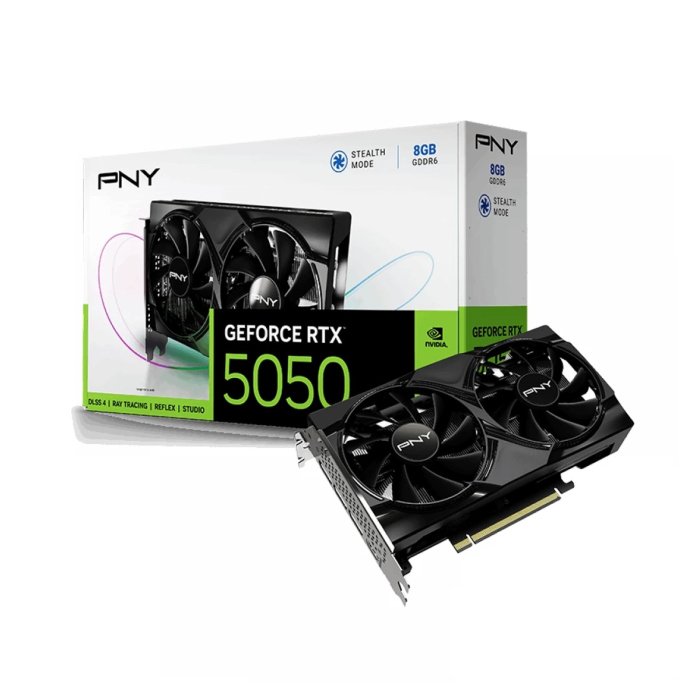
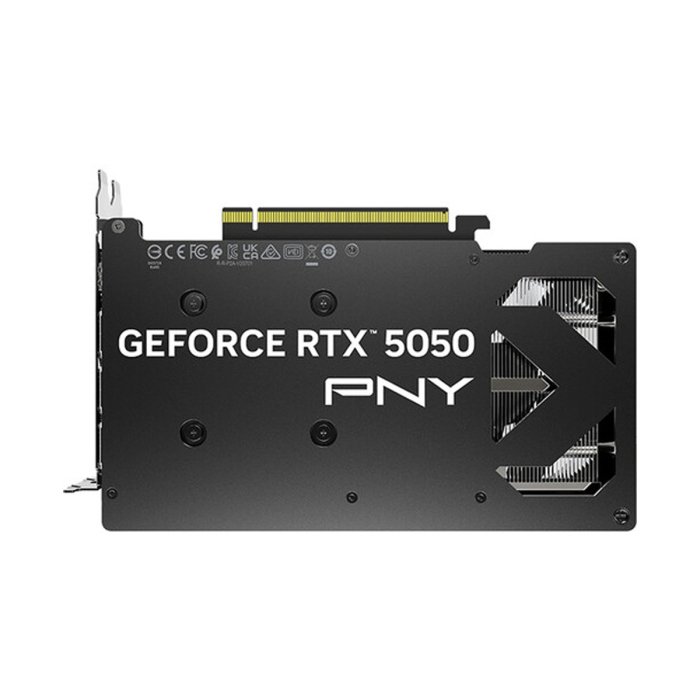
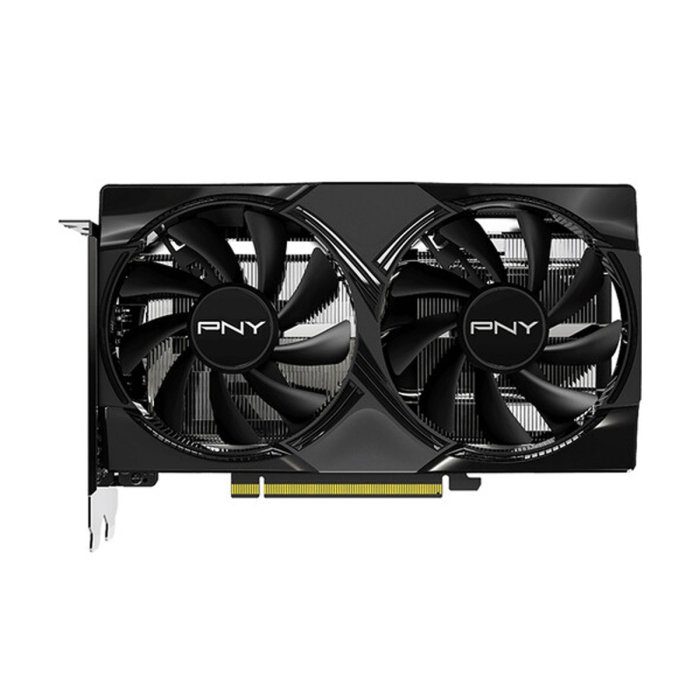
PNY GeForce RTX 5050 8 GB – Affordable Next-Gen Gaming & Creativity
Key Specifications
Meet the PNY GeForce RTX 5050 8 GB Graphic Card — a budget-friendly gateway into the latest GPU technology. Built on NVIDIA’s Blackwell architecture, this card delivers advanced ray-tracing, AI-accelerated tasks and excellent value for gamers and creators who want modern features without the top-tier price.
Architecture: NVIDIA Blackwell
CUDA Cores: 2,560
Base Clock: ~2,317 MHz
Boost Clock: ~2,572 MHz
Memory: 8 GB GDDR6 (20 Gbps)
Memory Interface: 128-bit
Memory Bandwidth: Up to ~320 GB/s
TDP / Power Draw: 130 W
Outputs: 3× DisplayPort 2.1b + 1× HDMI 2.1b
Power Connector: Single 8-pin (PCIe)
Recommended PSU: ~550 W system minimum
Form Factors:
Single-Fan: approx. 147 × 125 × 40 mm
Dual-Fan: approx. 200 × 120 × 40 mm
What Makes It a Great Option
Ideal Use-Cases
Things to Keep in Mind
Modern Gaming Tech: With 4th-gen Ray Tracing Cores and 5th-gen Tensor Cores, the RTX 5050 supports features like DLSS 4 (including Multi-Frame Generation) and advanced ray-traced effects.
Efficient Power Use: With a modest 130 W draw, it fits systems with standard PSUs and avoids the huge demands of higher-tier cards.
Compact Choices: The Single-Fan version makes it easier to fit in smaller or space-constrained builds, while the Dual-Fan version provides better cooling potential for more airflow-capable cases.
Great Feature Set for Price: While aimed at value-conscious buyers, you still get full modern connector support, 8 GB memory, and next-gen architecture — making it remarkably competitive.
Entry-level to mid-range gaming at 1080p (and in some titles 1440p) with ray tracing + DLSS.
Content creators working with moderate video editing, photo/3D workflows who want what the RTX 50-series brings without going high-end.
System upgrades where you want to modernize your GPU while keeping power and cooling demands modest.
8 GB memory is solid for many games today, but very demanding titles or high-resolution setups may push its limits.
Memory bus is 128-bit, so although performance is good for the class, it will not match higher-end cards with wider memory interfaces.
For ultra-high settings (4K, max ray tracing, ultra-high FPS) you may need to consider stepping up the tier.